
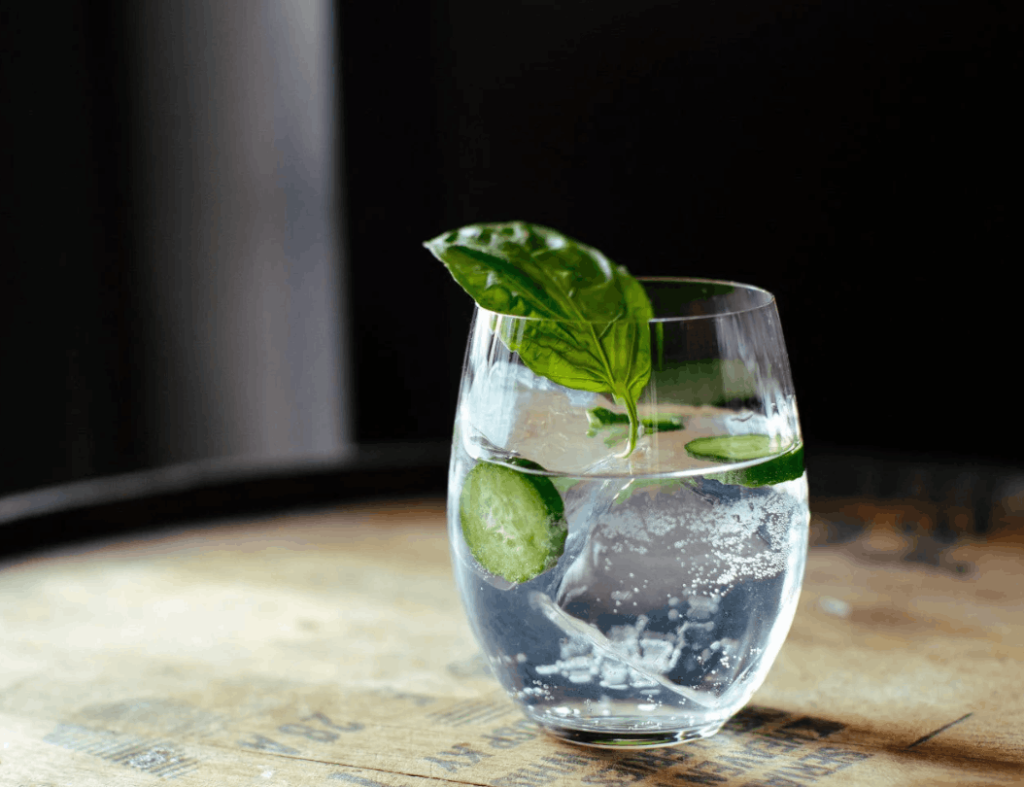
The post-IPO collapse of AMASS Brands Inc. has turned the stock into one of the more controversial small-cap consumer plays of 2026. Since its May 20 IPO, AMSS has lost roughly 50% of its value — and at one point traded nearly 65% below its highs — despite operating in one of the fastest-growing segments of the beverage industry: premium non-alcoholic spirits, functional drinks, and health-conscious alcohol alternatives.
That contradiction is exactly what makes AMSS interesting.
On one side, the company is still small, unprofitable, and vulnerable in a brutally competitive market dominated by global beverage giants. On the other side, AMASS may be positioned directly inside one of the largest long-term consumer behavior shifts happening globally: the move away from traditional alcohol consumption toward premium wellness-oriented drinking experiences.
The real question is no longer whether the non-alcoholic beverage market has potential.
It clearly does.
The question is whether AMASS can survive long enough — and scale fast enough — to become one of the category winners before larger companies either outcompete them or acquire the space entirely.
AMASS Brands is fundamentally different from traditional alcohol companies. According to its corporate structure and investor materials, the company operates across three main categories: premium wines, craft spirits, and increasingly non-alcoholic alternatives and functional beverages. Revenue currently still comes primarily from traditional alcoholic products, with approximately 50% tied to wine, 40% to spirits, and around 10% from non-alcoholic and functional beverage products.
That 10% number may look small today.
But strategically, it may become the most important part of the business.
The global non-alcoholic beverage industry is no longer a niche trend. It is becoming one of the fastest-growing categories in consumer staples. Consumer behavior — especially among Millennials and Gen Z — is changing rapidly. Health-conscious lifestyles, wellness trends, reduced alcohol consumption, fitness culture, and “social drinking without intoxication” are creating a completely new premium beverage category.
This is where AMASS becomes interesting.
Unlike older beverage companies trying to retrofit alcohol-free products into legacy portfolios, AMASS was designed around modern premium branding from the beginning. The company focuses heavily on design, lifestyle positioning, botanical ingredients, premium aesthetics, and wellness-oriented consumer experiences. Their products are positioned closer to luxury wellness brands than traditional liquor companies.
That matters because consumer spending in premium categories often survives downturns better than low-end mass-market products.
The company’s websites also reveal something important strategically: AMASS is not just selling beverages — it is trying to build a lifestyle brand ecosystem. The focus on premium packaging, direct-to-consumer identity, botanical formulations, and alcohol alternatives suggests management understands that future beverage competition will increasingly revolve around branding and consumer identity rather than purely alcohol content itself.
This creates both opportunity and risk.
The bullish case for AMASS is relatively straightforward.
The company operates in a market with enormous long-term growth potential. Premium craft beverages have historically achieved higher margins than mass-market alcohol products, while the non-alcoholic category is expected to grow aggressively over the next decade. Functional drinks, wellness beverages, botanical spirits, and alcohol-free social consumption are all structural trends rather than short-term fads.
If AMASS successfully establishes itself as a recognizable premium non-alcoholic brand before larger competitors fully dominate the category, the upside could be substantial.
This is one reason some investors compare the opportunity to the early stages of companies like Celsius Holdings, Monster Beverage, or even early-stage premium alcohol disruptors.
The company’s relatively small size may also become an advantage. With only around 25 employees and approximately $17.8 million in annual revenue, AMASS still operates with startup-like agility. Smaller companies can often react to consumer trends faster than multinational corporations burdened by large legacy product portfolios.
There is also a realistic acquisition angle here.
Large beverage companies have historically acquired smaller premium brands once they prove traction. Companies such as Diageo plc, Constellation Brands, Brown-Forman, Pernod Ricard, and Molson Coors have repeatedly expanded through acquisitions rather than purely internal innovation. In the alcohol-free category specifically, global beverage giants are actively searching for exposure because they recognize younger consumers are drinking differently than previous generations.
That means AMASS does not necessarily need to become a standalone giant to become a successful investment story.
It may simply need to become strategically valuable.
The ETF ownership is another mildly positive signal. While allocations remain small, the company already appears inside multiple consumer staples and beverage-focused ETFs including Invesco Dynamic Food & Beverage ETF, Fidelity MSCI Consumer Staples ETF, Vanguard Consumer Staples ETF, and Consumer Staples Select Sector SPDR Fund.
This does not mean institutions are strongly bullish yet.
But it does mean the company is already entering broader consumer-sector visibility.
Still, the bearish side of the story is very real.
AMASS remains unprofitable, losing approximately $14.6 million annually against just $17.8 million in revenue. That is a dangerous ratio for a newly public company operating in a highly competitive industry.
The post-IPO collapse reflects this concern.
Unlike AGCC — which benefited from strong whisky speculation, scarcity dynamics, and better profitability metrics — AMASS entered the public market during a period where investors have become increasingly skeptical toward small-cap consumer growth companies that burn cash without clear profitability timelines.
The difference between AGCC and AMSS is important.
AGCC operates in a speculative premium alcohol investment narrative with higher margins and stronger financial momentum. AMASS, meanwhile, is trying to build a future-facing wellness beverage company that still requires substantial scaling and brand investment.
That takes time.
And public markets are often impatient.
The biggest near-term risk is that AMASS becomes trapped in “microcap limbo” — too small for major institutional accumulation, too unprofitable for value investors, and too slow-growing for momentum traders.
This is where many small IPOs fail.
Another major threat comes from industry competition itself. Large multinational beverage companies absolutely could pressure smaller brands through pricing power, distribution dominance, and marketing budgets. Companies like Diageo plc, PepsiCo, Coca-Cola, and Constellation Brands can easily launch competing non-alcoholic products using existing global infrastructure.
However, history shows that large beverage companies often struggle to create authentic premium wellness brands internally.
Consumers in premium categories frequently prefer authenticity and niche identity over corporate mass-market branding. This is exactly why many multinationals eventually acquire successful emerging brands rather than competing directly against them.
From a technical perspective, the stock still looks fragile.
The IPO decline reflects weak post-listing momentum, limited institutional sponsorship, and low liquidity. The float is only around 5.75 million shares, meaning volatility can remain extreme.
The fact that the stock already experienced a 50–65% drawdown so quickly after IPO suggests the market initially overpriced the growth narrative relative to current fundamentals.
But paradoxically, this may also be what starts making the stock interesting.
At current levels, much of the early IPO euphoria has already been removed from the valuation. The market cap has fallen toward approximately $72 million — which is relatively small if the company eventually establishes a successful premium non-alcoholic category leader.
The problem is timing.
Right now, the stock still lacks confirmation that institutional buyers are meaningfully accumulating shares. In many successful IPO recoveries, the best opportunities emerge not during the initial collapse, but after stabilization and renewed volume expansion.
That means aggressive bottom-fishing remains risky.
A safer strategy may be waiting for confirmation of a sustained higher-low structure, improving revenue growth, or stronger institutional participation before building larger positions.
The company is not “junk” yet — but it is definitely speculative.
This distinction matters.
AMASS still operates inside a real, growing industry trend. The non-alcoholic spirits market likely becomes dramatically larger over the next decade. The real uncertainty is whether AMASS itself becomes a winner within that market.
That depends on several critical milestones:
scaling distribution,
improving gross margins,
achieving clearer profitability pathways,
building stronger direct-to-consumer brand loyalty,
and potentially expanding internationally.
If management executes well, AMASS could eventually evolve into either:
a valuable acquisition target,
a successful premium niche beverage company,
or a future wellness-consumer growth story.
If execution fails, the stock could slowly fade into small-cap irrelevance.
That is the reality of early-stage consumer IPO investing.
Investment Evaluation
| Factor | Rating (1–10) | Notes |
| Growth Potential | 8/10 | Strong long-term non-alcoholic beverage trend |
| Profitability | 2/10 | Heavy losses relative to revenue |
| Valuation | 6/10 | Much more reasonable after IPO collapse |
| Market Position | 5/10 | Promising niche, but still very small |
| Risk | 8/10 | High volatility and execution risk |
| Technical Picture | 4/10 | Weak post-IPO momentum |
| Acquisition Potential | 7/10 | Attractive category for large beverage companies |
Overall Investment Score: ~5.7/10
The most realistic outlook is probably somewhere between hype and failure. AMASS is unlikely to become the next global beverage giant overnight, but the company is positioned inside one of the most important long-term shifts in the beverage industry. That alone keeps the story alive.
One-sentence conclusion: AMASS Brands may currently look like a failed IPO on the surface, but beneath the collapsing chart sits a potentially valuable long-term play on the rapidly growing non-alcoholic premium beverage market — making it speculative, risky, but far more interesting than many small-cap consumer stocks after such a large selloff.