
Hemab Therapeutics Holdings, Inc. (COAG) is one of the more credible biotech IPOs of 2026 — but it’s still a classic early-stage biotech risk. The company came public at $18, opened around $27, and quickly traded between roughly $24 and $38, which tells you two things: investor demand was strong, and the stock immediately entered the typical post-IPO price-discovery phase. Unlike some recent speculative biotech listings, COAG has a genuine scientific story and unusually strong private backers. But it also has zero commercial reve
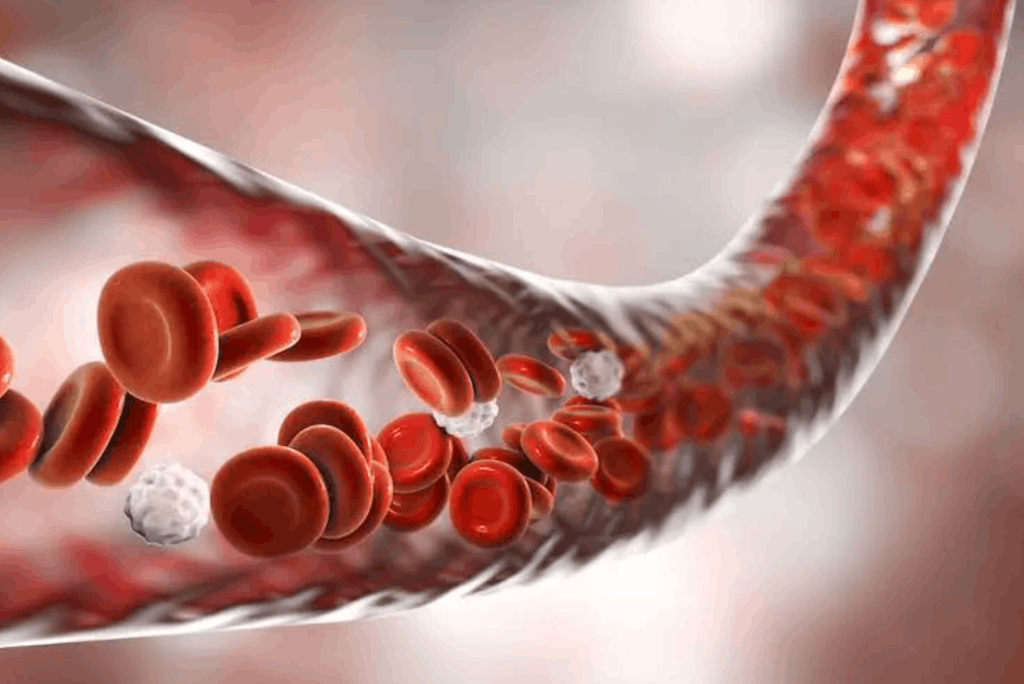
The key difference with Hemab is that the medical need it targets is real and measurable. The company focuses on rare inherited bleeding disorders — especially Glanzmann thrombasthenia, Factor VII deficiency, and von Willebrand disease. These are not crowded “me too” biotech markets. In fact, Hemab’s lead candidate may become the first prophylactic (preventive) treatment approved specifically for some of these patient groups. That matters because the market rewards first-in-class therapies in rare diseases very differently than standard biotech launches.
According to the company’s own pipeline disclosures, Hemab’s lead asset is sutacimig (HMB-001), a bispecific antibody aimed primarily at Glanzmann thrombasthenia (GT), a very rare but severe inherited bleeding disorder. A second program, HMB-002, targets von Willebrand disease (VWD), which is far more common globally and therefore potentially much larger commercially.
The market is currently valuing Hemab as a “pipeline platform,” not a single-drug company.
That distinction matters for investors.
The business today: no revenue, but a clear path
Hemab is still pre-commercial. It reported zero product revenue and approximately $63.9 million annual net loss, which is normal for a clinical-stage biotech. The uploaded report notes its only current revenue source is grant/collaboration related.
So investors buying today are not buying current operations — they’re buying future FDA approvals.
The company raised roughly $346.7 million in its upsized IPO, which is significant. That gives it a stronger cash runway than many biotech peers and reduces immediate dilution risk.
That IPO also attracted high-quality institutional biotech investors before listing, including:
- RA Capital Management
- Novo Holdings
- Avoro Capital Advisors
- Sofinnova Partners
These are serious life-science investors. Their presence is one reason COAG opened well above IPO price.
How big is demand for its products?
Sutacimig (GT)
Glanzmann thrombasthenia is ultra-rare. Global prevalence is very low — usually estimated only a few thousand diagnosed patients worldwide.
That sounds tiny.
But rare-disease drugs can still become extremely valuable because:
- treatment prices are high,
- competition is limited,
- patients often remain on therapy long term,
- regulators frequently accelerate approval.
Hemab recently received FDA Breakthrough Therapy Designation for sutacimig. That is a major catalyst because it signals both clinical promise and potential accelerated review.
That makes COAG more credible than many biotech IPOs.
HMB-002 (VWD)
This may ultimately be the bigger commercial story.
Von Willebrand disease affects hundreds of thousands globally, making it much larger than GT.
Importantly, current treatment is mostly reactive. Hemab’s goal is prophylactic therapy — preventing bleeds before they happen. If successful, this could materially expand market size because chronic prevention often becomes standard of care.
Community discussion around VWD trials shows meaningful patient interest in this approach.
So yes — demand exists.
The question is execution.
Near-term: is a real product coming soon?
Short answer: not immediately, but closer than many IPO-stage biotechs.
Sutacimig already completed positive Phase 2 data and management has stated intent to advance into pivotal Phase 3.
That means:
- commercialization could still be 2–4 years away,
- but major valuation milestones may arrive earlier through:
- pivotal trial launch,
- updated data,
- partnership,
- acquisition speculation.
So investors are not waiting for revenue next quarter — they are waiting for catalyst-driven rerating.
Why the stock moved so much
The jump from $18 pricing to $27 opening happened because institutional demand exceeded supply.
The reasons:
- Rare-disease biotech regained favor in 2026 IPO market.
- Strong pre-IPO investor syndicate created confidence.
- Breakthrough designation increased scientific credibility.
- Float remains relatively limited, amplifying price movement.
That initial range ($24–38) is normal for biotech IPOs.
It does not necessarily mean exhaustion.
It means the market is deciding how much success is already priced in.
Competitors
Hemab’s direct listed competitors are not perfect matches because its niche is highly specialized. Closest public comparables include:
- BioMarin Pharmaceutical Inc.
- Ultragenyx Pharmaceutical Inc.
- Vertex Pharmaceuticals Incorporated
- CRISPR Therapeutics AG
The most realistic comparison is BioMarin-style orphan disease commercialization.
That’s what investors are hoping Hemab becomes.
Bulls case
The bullish thesis is strong:
- high unmet need,
- orphan pricing power,
- strong institutional support,
- accelerated regulatory pathway,
- strong balance sheet post IPO,
- multiple programs not just one.
If sutacimig succeeds, Hemab could evolve into a premium rare-disease franchise.
That would justify significantly higher valuation.
Bear case
The risks are substantial:
- zero revenue,
- regulatory risk,
- long timeline,
- clinical setbacks,
- future dilution,
- niche patient populations.
Even strong data can fail commercially if reimbursement is weak.
And biotech valuations often collapse 40–60% after disappointing milestones.
Has the stock peaked?
Probably not necessarily peaked — but the easy post-IPO move may be over.
The initial repricing from $18 to $30+ was driven by:
- scarcity,
- hype,
- institutional allocation.
From here, performance likely depends more on trial milestones.
That means the stock may become less explosive and more event-driven.
So yes: the “IPO pop” phase may be cooling, but not the long-term story.
Realistic future
Short term (6–12 months)
Likely driven by:
- clinical updates,
- trial enrollment,
- regulatory interactions.
Volatility remains high.
Long term (3–5 years)
Success depends entirely on:
- approval,
- reimbursement,
- launch execution.
If approved, rare-disease therapies can become very valuable despite tiny patient counts.
Investment Evaluation
| Factor | Rating | Notes |
| Growth Potential | 8/10 | rare disease upside |
| Profitability | 1/10 | no revenue |
| Valuation | 5/10 | moderate for biotech |
| Market Position | 7/10 | strong niche |
| Risk | 8/10 | clinical binary |
| Technical Picture | 6/10 | stabilizing |
Overall Score: ~5.8/10
COAG is one of the stronger science-backed biotech IPOs of 2026, and unlike many zero-revenue names, it already has meaningful clinical momentum plus FDA recognition.
But investors should understand: this remains a catalyst stock, not a fundamentals stock.
The science can justify upside. The timeline can test patience.
One-sentence conclusion: COAG looks more like a legitimate rare-disease biotech investment than a short-lived IPO pump, but after the strong opening rally, future gains will likely depend almost entirely on successful Phase 3 execution rather than continuing IPO hype.