
Most recent IPOs have followed a familiar pattern: exciting narrative, weak fundamentals, and explosive volatility. Cardinal Infrastructure Group Inc. (CDNL) looks very different. The company operates in one of America’s most essential industries, generates nearly half a billion dollars in annual revenue, is already profitable, and continues benefiting from one of the largest infrastructure spending cycles in decades. The stock has surged roughly 140% since its IPO, and both technical indicators and analyst sentiment remain bullish—but after such a strong run, investors need to determine whether this is still an underappreciated infrastructure compounder or a stock that may have already priced in most of its near-term upside.
Unlike many speculative IPO stories tied to artificial intelligence, biotech pipelines, or meme-stock momentum, Cardinal Infrastructure operates in a straightforward but highly valuable business: building the physical systems required for modern communities to function. After reviewing the company’s website, financial metrics, market positioning, and broader infrastructure trends, Cardinal emerges as one of the more fundamentally sound recent public listings—but not without risks.
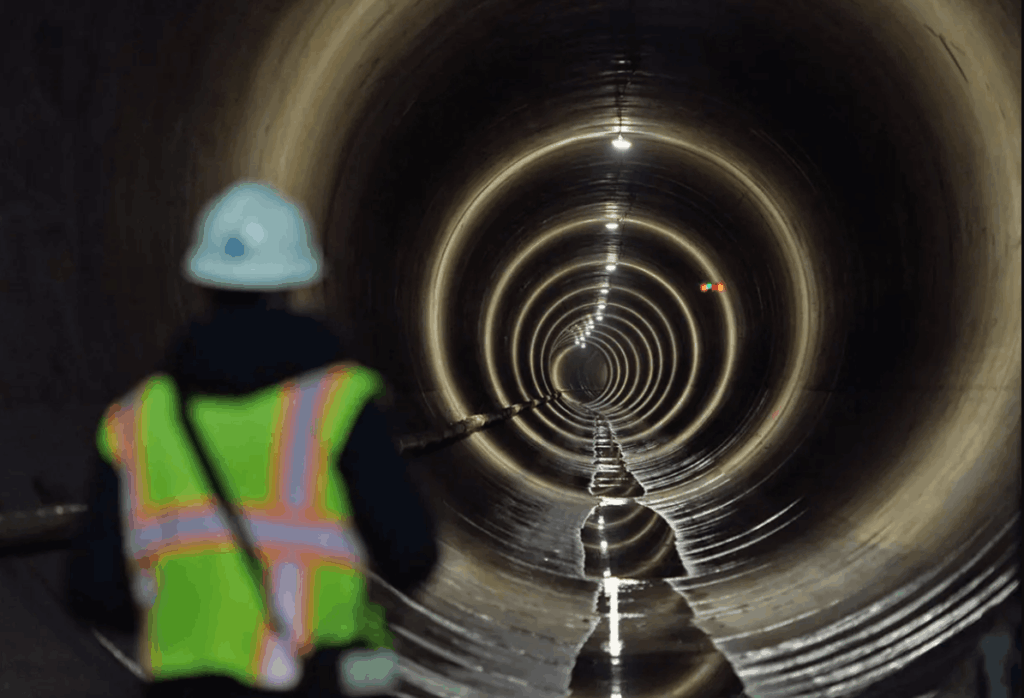
The company primarily focuses on large-scale civil infrastructure development throughout the Southeastern United States, with operations tied to water systems, sewer installation, stormwater management, land preparation, and broader utility development. These services may not sound exciting compared to AI or biotech, but they address one of the most urgent long-term issues facing the United States: aging infrastructure.
Across the country, municipalities are struggling with outdated water systems, deteriorating sewer networks, and rapidly expanding suburban housing demand. The passage of the Infrastructure Investment and Jobs Act created a major tailwind for companies involved in rebuilding and modernizing infrastructure. Billions of dollars continue flowing into roads, utilities, drainage systems, and residential expansion projects. Cardinal has positioned itself directly in the middle of this trend.
Its business model is built around three major revenue streams. Roughly half of revenue comes from wet utility infrastructure, including water systems, sewer systems, and stormwater projects. This segment is particularly attractive because it requires specialized expertise and typically faces less competition than standard construction services. Around 30% of revenue comes from site development activities such as land clearing, grading, and erosion control. The remaining 20% comes from drilling, blasting, paving, and related infrastructure preparation services.
This diversified service structure is one of the company’s biggest strengths. Many smaller contractors focus on only one niche, which makes them vulnerable to project slowdowns in specific categories. Cardinal’s ability to offer integrated infrastructure services gives it both pricing flexibility and operational stability. Developers and municipalities can rely on one provider for multiple phases of project execution, which improves efficiency and reduces coordination complexity.
This diversification also helps explain why investors have become increasingly bullish on the company. Cardinal participates in both residential development and municipal infrastructure projects, giving it broad exposure across private and public spending cycles. If residential development slows, municipal contracts can provide stability. If public spending slows temporarily, private development projects may help offset weakness.
Financially, Cardinal looks far stronger than most recent IPOs. The company generated approximately $456 million in annual revenue while producing roughly $22.7 million in net income, a major differentiator compared to many newly public growth companies that remain deeply unprofitable. The company employs approximately 1,480 workers, generating over $308,000 in revenue per employee, which suggests relatively strong operational efficiency for a labor-intensive infrastructure business.
This revenue-per-employee figure has become one of the quieter bullish signals for Cardinal. Infrastructure companies often struggle with labor inefficiencies and rising wage pressures, but Cardinal appears to be managing its workforce productively. Investors often overlook these operational metrics, but they can reveal whether a business is scaling efficiently.
Another major bullish factor is the company’s acquisition strategy. Cardinal has been expanding geographically through acquisitions, helping reduce concentration risk in its core operating markets. Expanding across the Southeast gives the company access to some of the fastest-growing population regions in the United States, where housing demand and infrastructure expansion remain strong.
Wall Street has largely embraced the company since its IPO. Analyst sentiment remains highly positive, and technical indicators continue signaling bullish momentum. This confidence helped push the stock roughly 140% higher since its December 2025 debut.
But this is where the investment story becomes more complicated.
While the long-term infrastructure thesis remains compelling, the stock itself may be getting ahead of fundamentals in the short term. Shares have already reached or exceeded several analyst price targets, suggesting that near-term upside may be more limited unless earnings continue outperforming expectations.
And recent earnings results introduced some concerns. Cardinal recently posted an earnings-per-share miss of roughly 48.68% below expectations, raising questions about potential project cost overruns, labor inflation, execution challenges, or margin pressure. One weak quarter does not necessarily break the investment thesis, but it introduces uncertainty that investors should monitor closely.
The company’s beta of 2.16 also highlights that this is not a low-volatility infrastructure stock. Despite operating in a relatively stable industry, Cardinal’s shares have moved much more aggressively than traditional construction or utility peers. This likely reflects its recent IPO status, smaller public float, and elevated investor expectations.
Its lack of dividend payments may also discourage traditional infrastructure investors who often prefer mature companies such as AECOM, Quanta Services, Inc., MasTec, Inc., or EMCOR Group, Inc. that provide more established shareholder return models.
Competition remains intense as well. Large players such as AECOM, Quanta Services, Inc., Sterling Infrastructure, Inc., and MasTec, Inc. all operate in overlapping markets with significantly larger resources. Smaller regional contractors can also pressure margins through aggressive pricing.
Still, Cardinal’s specialization in wet utility infrastructure provides some insulation from broader competition. These projects often require expertise that general construction firms may lack.
Institutional ownership remains in relatively early stages. The company has begun appearing in smaller ETFs and institutional portfolios, but widespread large-scale institutional ownership has not yet fully materialized. If larger funds begin increasing exposure, that could create another future catalyst.
From a technical perspective, momentum remains strong, but cracks are beginning to emerge. The recent pullback over the past week suggests that some investors may be taking profits after the stock’s enormous post-IPO rally. This does not necessarily signal a major reversal, but it does suggest that short-term upside may be more limited than it was earlier in the rally.
The long-term investment case remains compelling because the underlying business addresses a real and growing need. America’s infrastructure problems are not disappearing anytime soon, and Cardinal has built a business directly tied to solving those problems.
The bigger question is valuation discipline.
At current levels, investors are no longer buying an overlooked IPO—they are buying a company that has already experienced significant multiple expansion and carries higher expectations moving forward.
Investment Evaluation
| Factor | Rating (1–10) | Notes |
| Growth Potential | 8/10 | Massive infrastructure demand |
| Profitability | 7/10 | Already profitable |
| Valuation | 6/10 | Higher after rally |
| Market Position | 7/10 | Strong niche positioning |
| Risk | 6/10 | Cyclical and volatile |
| Technical Picture | 7/10 | Bullish but cooling |
Overall Investment Score: ~6.8/10
Cardinal Infrastructure Group Inc. is one of the most fundamentally credible recent IPOs on the market today. It has real revenue, real profits, and operates in a sector with enormous long-term demand.
One-sentence conclusion: Cardinal Infrastructure (CDNL) may still be a strong long-term winner—but after a 140% rally, this looks far more attractive on pullbacks than at current prices.