
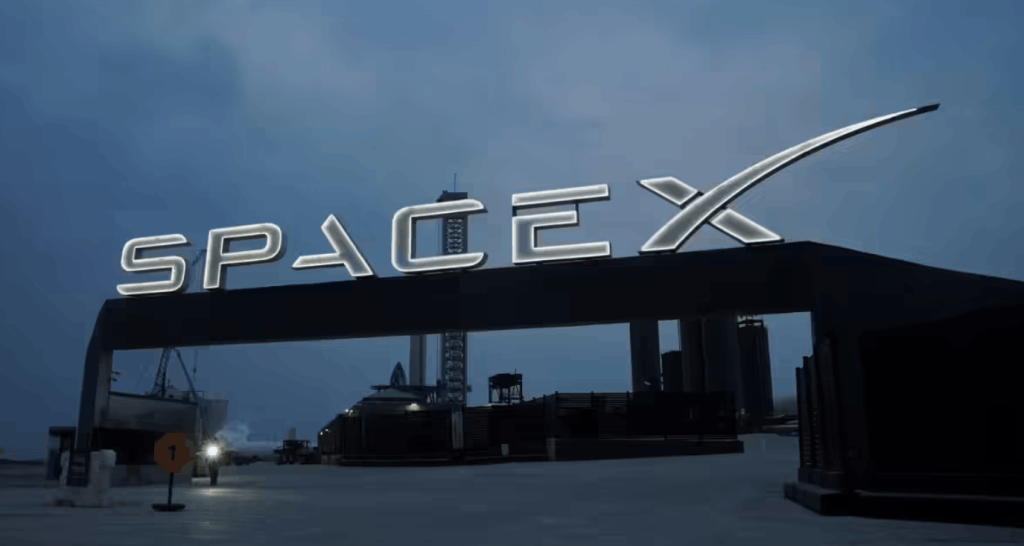
The Hidden Opportunity Around the SpaceX IPO
The upcoming SpaceX (SPCX) IPO is not only one of the most anticipated stock market events of the decade—it could also become one of the largest wealth-transfer events ever seen in public markets. While most investors are focused on buying SpaceX itself, experienced market participants know that some of the biggest opportunities often emerge in the surrounding ecosystem: strategic shareholders, suppliers, aerospace contractors, satellite technology companies, and ETFs with direct or indirect SpaceX exposure.
SpaceX has evolved far beyond being a launch company. Today it is simultaneously a commercial launch provider, a global satellite operator through Starlink, a defense contractor via Starshield, an AI infrastructure participant through its ties with xAI, a space manufacturing company through Starfactory, and a future leader in lunar and Mars logistics through Starship. Very few companies operate across so many high-growth sectors at once.
That broad ecosystem creates investment opportunities that may be less risky than buying a record-breaking IPO directly. The key question for investors is simple:
Should you buy SpaceX—or the companies already making money from SpaceX?
Public Companies With Direct or Indirect Ownership in SpaceX
One of the most interesting aspects of the SpaceX story is that several publicly traded companies already hold stakes or have economic exposure to the company.
Alphabet (NASDAQ: GOOGL / GOOG)
Alphabet remains the best-known strategic investor. Through a major investment round initiated in 2015, Google and its partners acquired roughly a 7% stake, later diluted to an estimated 6% ownership. While SpaceX is only a small fraction of Alphabet’s trillion-dollar valuation, any successful IPO could unlock hidden value that has largely remained trapped inside Alphabet’s balance sheet.
However, investors should remain realistic. Even a spectacular SpaceX appreciation would only modestly affect Alphabet’s financial statements because of its enormous size and diversified revenue base.
Tesla (NASDAQ: TSLA)
Tesla’s connection is more complex. The growing integration between Elon Musk’s corporate ecosystem—including xAI, Tesla, and SpaceX—has increased speculation that Tesla could indirectly benefit from SpaceX’s success. Some market participants view Tesla as a proxy for the broader “Musk ecosystem trade,” where positive sentiment toward one Musk company spills over into the others.
That said, Tesla’s valuation is overwhelmingly driven by electric vehicles, robotics, autonomous driving, and AI, meaning SpaceX exposure is an additional narrative rather than the core investment thesis.
Bank of America (NYSE: BAC)
Bank of America participated in earlier SpaceX financing rounds, reportedly investing approximately $250 million. For a financial institution with trillions in assets, the direct economic impact is limited. The bigger benefit may come from advisory, investment banking, and capital markets activity surrounding future SpaceX-related financing events.
NVIDIA (NASDAQ: NVDA) and Cisco Systems (NASDAQ: CSCO)
The increasing convergence of AI infrastructure and satellite computing has strengthened strategic relationships between SpaceX, xAI, NVIDIA, and Cisco. NVIDIA’s AI accelerators and networking technologies increasingly underpin modern AI data centers, while Cisco remains deeply integrated into global communications infrastructure.
Neither company depends on SpaceX, but SpaceX’s growing AI and satellite ambitions could create incremental demand for advanced networking and computing hardware.
The Companies Actually Making Money From SpaceX
If SpaceX itself is the star, then its suppliers are the companies quietly selling the picks and shovels during the gold rush.
Filtronic plc (LSE: FTC)
Among publicly traded companies, Filtronic may have one of the clearest direct relationships with SpaceX. The company announced a strategic partnership to supply high-performance E-band solid-state power amplifier modules for the Starlink network, with multi-year order commitments already disclosed.
Unlike many aerospace suppliers that depend on multiple customers, Filtronic’s SpaceX relationship has become an important growth catalyst. If Starlink deployment accelerates after the IPO, Filtronic could see additional revenue expansion.
STMicroelectronics (NYSE: STM)
STMicroelectronics supplies semiconductor components and radio-frequency technologies used across advanced communication systems. Although SpaceX vertically integrates much of its manufacturing, global semiconductor specialists remain essential suppliers for highly specialized components used in satellite terminals and communication hardware.
Importantly, STM is not a pure SpaceX play. Its automotive, industrial, and IoT businesses provide substantial diversification, reducing company-specific risk.
Carpenter Technology (NYSE: CRS)
Carpenter Technology specializes in advanced specialty alloys and high-performance engineered materials capable of surviving extreme temperatures and mechanical stresses. These materials are critical for aerospace engines, defense systems, and increasingly for advanced launch vehicles such as Starship and Raptor engines.
The long-term growth of reusable rockets, hypersonic systems, and advanced defense applications could create a secular tailwind extending well beyond SpaceX itself.
CPS Technologies (NASDAQ: CPSH)
CPS Technologies develops advanced metal-matrix composite materials used for thermal management and protection of high-performance electronics. Satellite systems, defense electronics, and space applications increasingly require these specialized solutions as payload density and computational requirements rise.
Ducommun Incorporated (NYSE: DCO)
Ducommun is one of the more diversified aerospace suppliers, providing structural assemblies, electronic systems, cable harnesses, and specialized aerospace components. SpaceX represents only one of many potential customers, but the expansion of commercial launch activity broadly supports the company’s long-term outlook.
Partners, Competitors, and Strategic Allies
The aerospace and defense industry is unusual because companies often compete and cooperate simultaneously.
L3Harris Technologies (NYSE: LHX)
L3Harris competes with SpaceX for certain U.S. government and military space contracts while also benefiting from SpaceX launches that carry L3Harris-built payloads into orbit. The company operates in a hybrid relationship: competitor, supplier, and customer all at once.
RTX Corporation (NYSE: RTX)
RTX (formerly Raytheon Technologies) is deeply integrated into U.S. defense and aerospace programs. SpaceX regularly launches government satellites and payloads that incorporate RTX technologies. Meanwhile, RTX subsidiaries such as Collins Aerospace provide advanced avionics and aerospace components that complement SpaceX missions.
Honeywell International (NASDAQ: HON)
Honeywell remains one of the aerospace industry’s foundational suppliers. Even though SpaceX aggressively pursues vertical integration, there are many standardized navigation systems, sensors, switches, valves, and industrial components where partnering with established leaders is simply more efficient than internal development.
Aerojet Rocketdyne
Aerojet Rocketdyne represents an interesting case because it is both a competitor and a supplier. Its propulsion technologies compete directly with SpaceX’s internally developed Raptor engines in certain segments, yet specialized components and legacy aerospace relationships continue to create areas of overlap within the broader supply chain.
Rocket Lab (NASDAQ: RKLB)
Rocket Lab is arguably the closest publicly traded “pure-play” competitor to SpaceX. While its current Electron rocket targets smaller payloads, the upcoming Neutron rocket is designed to challenge portions of Falcon 9’s addressable market. Rocket Lab is also building satellite systems and spacecraft components, making it a competitor not only in launch services but also in satellite manufacturing.
Ironically, a successful SpaceX IPO may lift Rocket Lab shares as investors seek publicly traded alternatives to gain exposure to the expanding commercial space industry. In many ways, Rocket Lab could become the “sympathy trade” of the SpaceX era.
ETFs and Funds Offering SpaceX Exposure
Many retail investors may never receive a meaningful allocation in the IPO itself. Fortunately, several funds already provide indirect exposure.
- Baron Partners Fund (NASDAQ: BPTRX) has long maintained SpaceX as one of its largest private holdings.
- Destiny Tech100 (NYSE: DXYZ) was specifically created to provide access to leading private technology companies and counts SpaceX among its core positions.
- ARK Venture Fund (ARKVX) also offers meaningful private-market exposure through Cathie Wood’s venture strategy.
These funds could see renewed investor inflows after the IPO as investors look for diversified methods of participating in the broader SpaceX ecosystem.
Will These Stocks Rise After the SpaceX IPO?
The answer is nuanced.
In the short term, many of these stocks may experience positive sentiment simply because investors search for secondary beneficiaries. We have already seen this phenomenon around AI infrastructure companies during the NVIDIA rally. A successful SpaceX debut could generate a similar “space infrastructure premium.”
However, investors should avoid assuming that every supplier will automatically surge. For giants such as Alphabet, Bank of America, NVIDIA, Honeywell, or RTX, SpaceX represents only a very small piece of a much larger business.
The companies with the greatest potential leverage to SpaceX’s growth are likely the more specialized suppliers and focused space infrastructure businesses:
- Filtronic,
- Carpenter Technology,
- CPS Technologies,
- Ducommun,
- and especially Rocket Lab.
Has the Market Already Priced In the SpaceX Story?
To some extent, yes.
Many aerospace, defense, and space-related stocks have already benefited from growing anticipation surrounding the largest IPO in history. Some investors have accumulated positions in suppliers months ahead of the listing. In addition, the expectation that SpaceX could enter major indexes and attract enormous ETF flows has fueled speculation across the entire sector.
Nevertheless, the long-term opportunity is likely less about the IPO event itself and more about what happens afterward.
If SpaceX successfully scales Starship, expands Starlink globally, grows Starshield defense contracts, and deepens its AI infrastructure strategy, then suppliers and ecosystem partners could benefit from years—not weeks—of increasing demand.
How Dependent Is SpaceX on These Companies?
One of SpaceX’s greatest strengths is its vertical integration. The company manufactures engines, structures, avionics, software, and many mission-critical components internally. This reduces supplier dependency compared with traditional aerospace giants.
However, even SpaceX cannot realistically internalize every aspect of advanced manufacturing. Specialized semiconductors, aerospace alloys, advanced composites, precision RF systems, and certain standardized industrial components remain more economical to source externally.
Likewise, many suppliers are not dependent on SpaceX alone. Companies like RTX, Honeywell, L3Harris, Carpenter Technology, and STMicroelectronics possess broad customer bases across aerospace, defense, industrial, and electronics markets. SpaceX may accelerate growth, but it is not the sole pillar supporting their businesses.
Investment Outlook: Should Investors Buy the Ecosystem Instead of SpaceX?
For many investors, the answer may actually be yes.
The SpaceX IPO itself could become highly volatile due to extraordinary demand, limited float, and speculative enthusiasm. Analysts already expect unusually sharp price swings during the early trading period because only a relatively small percentage of shares will be freely available.
In contrast, diversified suppliers and strategic partners offer a different risk profile. Investors gain exposure to the long-term growth of commercial space without relying entirely on one historic IPO.
A balanced approach may therefore be the most attractive:
- own some direct SpaceX exposure if valuation becomes reasonable,
- complement it with ecosystem leaders,
- and consider selective investments in suppliers and space infrastructure specialists that stand to benefit from the next decade of orbital industrialization.
Investment Evaluation
| Factor | Rating |
| Space Industry Growth Potential | 10/10 |
| SpaceX Ecosystem Strength | 9/10 |
| Supplier Diversification | 8/10 |
| Competitive Moat | 9/10 |
| Long-Term Demand Visibility | 9/10 |
| Near-Term IPO Hype Potential | 10/10 |
| Valuation Risk (SpaceX itself) | 4/10 |
| Volatility Risk | 4/10 |
| Supplier Investment Appeal | 8/10 |
| Long-Term Opportunity | 9/10 |
Overall Investment Score: 8.6/10
Final Verdict
The SpaceX IPO will likely dominate financial headlines, but the smartest investment opportunities may not be limited to SpaceX shares themselves. Publicly traded suppliers, strategic partners, and companies with direct exposure to the expanding commercial space economy could quietly become some of the biggest long-term winners.
For investors who believe that reusable rockets, satellite broadband, defense space infrastructure, and orbital manufacturing will define the next industrial cycle, building a diversified “SpaceX ecosystem portfolio” may ultimately prove more rewarding—and less risky—than chasing the IPO alone.