
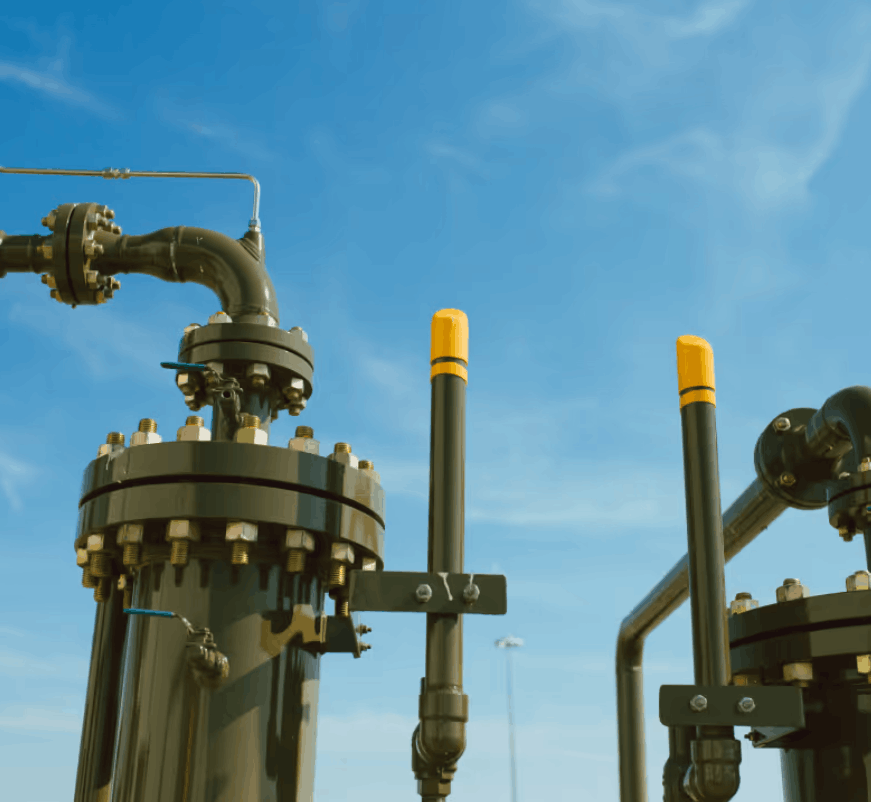
While retail investors continue chasing AI, biotech, and defense names, Flowco Holdings Inc. (FLOC)has quietly built something far more traditional—but potentially far more durable: a profitable oilfield infrastructure business with real cash flow, dividend payments, and a growing position in production optimization technology. The company generated nearly $760 million in annual revenue, remains profitable, and technical indicators still point toward bullish momentum. The real question is whether Flowco is an underfollowed long-term winner—or simply another energy stock vulnerable to oil cycle volatility.
After reviewing Flowco Holdings Inc.’s (FLOC)corporate website, financial metrics, acquisition strategy, analyst commentary, and broader oilfield service landscape, the company appears significantly stronger than many recent IPO names because it is built on recurring operational demand rather than speculative future narratives.
Flowco operates in the oil and gas production optimization space. Instead of drilling for oil itself, the company helps exploration and production companies maximize output from existing wells through artificial lift systems, methane reduction technologies, and production optimization services. This is an important distinction because Flowco’s business model is tied to efficiency improvements rather than pure commodity speculation.
Its largest revenue driver comes from artificial lift solutions, which account for roughly half of total revenue. These systems become increasingly critical as oil wells mature and natural pressure declines. Producers often need artificial lift technologies to maintain output levels, making this a recurring operational need.
Roughly 30% of revenue comes from broader production optimization services, where Flowco helps customers improve operational efficiency, reduce downtime, and maximize production economics.
The remaining portion of revenue comes from maintenance services, rental equipment, and related infrastructure solutions that create recurring service revenue.
This diversified model gives Flowco a more stable foundation than many traditional oil service companies that rely heavily on drilling activity alone.
One of the biggest reasons analysts remain bullish is the company’s margin profile. Analysts have highlighted that Flowco currently generates higher EBITDA margins than many peers, which supports stronger free cash flow generation and gives management greater financial flexibility for acquisitions, shareholder returns, and future investments.
That margin advantage is partly driven by differentiated technology.
Flowco has developed strong positioning in high-pressure gas lift systems and methane abatement solutions, both of which are becoming increasingly important as energy companies face growing efficiency demands while simultaneously trying to lower emissions. This gives Flowco exposure to both traditional oilfield spending and the broader environmental efficiency trend within energy production.
This dual exposure could help Flowco take additional market share over time.
A major strategic development was its acquisition of Valiant Artificial Lift Solutions, which significantly expanded Flowco’s artificial lift portfolio by adding electric submersible pump capabilities.
This acquisition matters because it broadens Flowco’s ability to offer multiple lift solutions depending on customer needs. It also opens potential expansion opportunities into new geographic basins and international markets where demand for electric submersible pumps is stronger.
This acquisition could become one of Flowco’s largest long-term growth catalysts.
Financially, the company looks significantly healthier than most recent IPO stocks.
Flowco generated approximately $759.7 million in annual revenue and roughly $41.4 million in net income, while maintaining a market capitalization of roughly $2.17 billion.
The company employs roughly 1,280 workers, generating approximately $593,000 in revenue per employee, which is highly efficient for an industrial service business.
Its net income per employee of roughly $32,000 also reflects solid operational discipline.
Unlike many growth stocks, Flowco also returns capital to shareholders.
Its dividend yield of approximately 1.33% may not seem large, but it signals management confidence in future cash flow generation and a willingness to reward shareholders—something relatively rare among newly public companies.
From a technical perspective, the stock continues showing buy signals across multiple timeframes. Unlike many recent IPOs that experience unsustainable spikes followed by collapses, Flowco’s technical chart has been considerably more stable.
Its relatively low beta of 0.37 further reinforces this point. Compared to many energy stocks that swing aggressively with commodity prices, Flowco has shown relatively low volatility.
However, investors should not ignore the risks.
The biggest issue remains commodity exposure.
Even though Flowco does not directly produce oil, its customers do. If exploration and production companies reduce capital budgets because of lower oil prices, demand for Flowco’s services could decline.
This becomes especially relevant during periods of oil price volatility.
The Valiant acquisition also introduces execution risk. Because the deal was financed through a combination of cash and stock, it may reduce cash reserves while also diluting existing shareholders if expected synergies fail to materialize.
Regulatory risks also exist. While methane abatement technology could become a major growth opportunity, stricter regulation may also create higher compliance costs or force shifts in technology requirements.
Valuation is another concern.
Flowco currently trades at a P/E ratio above 51, which looks elevated compared to many traditional oilfield service peers. Investors are clearly pricing in future growth, margin expansion, and successful integration of acquisitions. If growth slows, valuation compression becomes a real risk.
Competition remains intense. Flowco competes with much larger players such as SLB, Halliburton Company, Baker Hughes Company, ChampionX Corporation, and NOV Inc..
These companies have significantly larger balance sheets and global infrastructure, but Flowco’s niche specialization allows it to remain agile in targeted production optimization markets.
Institutional ownership has also been quietly increasing through energy-focused and small-cap ETFs, which may create additional long-term support if the company continues executing.
The biggest investment debate surrounding Flowco is simple: investors are buying a high-quality niche operator—but they are no longer buying it cheaply.
The company has real earnings, strong margins, recurring demand drivers, and attractive long-term industry positioning. That makes it fundamentally stronger than many speculative IPO names.
But energy remains cyclical, and premium valuations can quickly contract if oilfield spending weakens.
Investment Evaluation
| Factor | Rating (1–10) | Notes |
| Growth Potential | 7.5/10 | Artificial lift expansion + methane growth |
| Profitability | 8/10 | Strong EBITDA margins + positive earnings |
| Valuation | 5/10 | Premium P/E remains a concern |
| Market Position | 7/10 | Strong niche technology player |
| Risk | 5.5/10 | Energy cyclicality + acquisition risk |
| Technical Picture | 7/10 | Buy signals remain intact |
Overall Investment Score: ~6.7/10
Flowco Holdings Inc.(FLOC) looks like one of the more fundamentally attractive recent industrial IPOs—but investors should recognize they’re paying a premium for quality.
One-sentence conclusion: Flowco looks more like a long-term accumulation stock than a short-term trading opportunity—but waiting for pullbacks may offer a far better risk/reward entry point.