
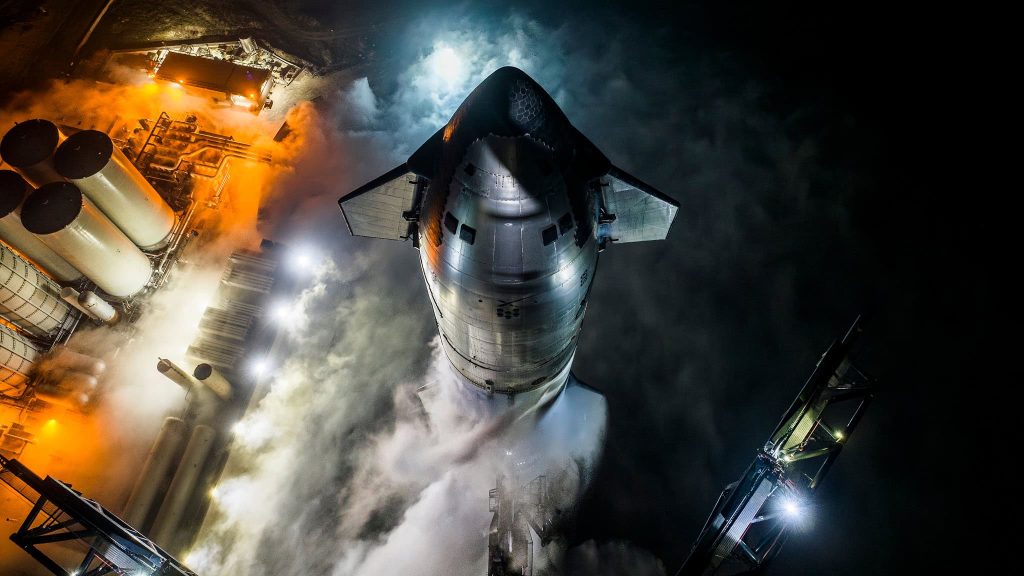
credit:spaceX
Few IPOs have ever generated the level of anticipation currently surrounding SpaceX. This is not simply another technology company coming to market. It is arguably the most strategically important private company in the world entering public markets, with businesses spanning launch services, satellite communications, defense, AI infrastructure, national security, and potentially the future of humanity’s expansion beyond Earth.
At an IPO price of $135 per share and an implied valuation approaching $1.75 trillion, SpaceX is preparing for what may become the largest IPO in history. The company aims to raise approximately $75 billion, surpassing every previous public offering on record.
The obvious question investors are asking is not whether SpaceX is a great company. That debate is largely over.
The real question is whether SpaceX stock will be a great investment at IPO pricing.
And those are two very different things.
SpaceX Is No Longer Just a Rocket Company
Many investors still think of SpaceX as a launch provider competing with government contractors.
That view is years out of date.
Today SpaceX operates across multiple high-growth industries simultaneously.
Its business ecosystem includes:
- Falcon 9 reusable launch services
- Falcon Heavy heavy-lift missions
- Starship development
- Starlink global broadband network
- Starshield military communications
- NASA human spaceflight programs
- Defense and intelligence contracts
- Direct-to-cell satellite communications
- AI infrastructure initiatives
- Future lunar and Mars transportation systems
This diversification is precisely why investors struggle to value the company.
Is SpaceX an aerospace company?
A telecommunications company?
A defense contractor?
An AI infrastructure company?
The answer is increasingly: all of them.
Starlink Is Quietly Becoming the Real Story
While Starship captures headlines, Starlink is becoming the financial engine behind SpaceX.
Recent disclosures indicate that Starlink now contributes the majority of company revenue and profits, with subscriber growth expanding from roughly 2 million users a few years ago to over 10 million users globally. Revenue from connectivity services has become the dominant earnings driver for the company.
This matters enormously.
Rocket launches are impressive.
Recurring subscription revenue is what Wall Street pays premium multiples for.
Every new Starlink subscriber creates predictable monthly cash flow.
Every satellite launched strengthens the network moat.
Every new country approval expands the addressable market.
In many ways, investors buying SpaceX are actually buying Starlink.
That distinction is important because telecom-style recurring revenue is significantly more valuable than project-based launch revenue.
Why SpaceX Has Become Practically Unbeatable in Launch Services
The company’s dominance in launch services has become one of the strongest competitive advantages ever built in aerospace.
Falcon 9 launches more frequently than entire national space programs.
Reusable rockets have fundamentally altered launch economics.
Competitors still struggle to match SpaceX’s launch cadence, reliability, and pricing.
The company’s launch business benefits from a powerful flywheel:
more launches →
lower costs →
more customers →
more cash flow →
more development spending →
even more launches.
This advantage compounds every year.
Today, there is no true equivalent competitor operating at SpaceX’s scale.
The Real Competitive Landscape
Many investors assume SpaceX faces numerous rivals.
In reality, the list is surprisingly short.
Blue Origin
Blue Origin remains the most visible competitor because of Jeff Bezos.
However, despite enormous financial backing, Blue Origin still trails SpaceX significantly in launch frequency, reusability, and commercial deployment.
Rocket Lab
Rocket Lab is perhaps the most respected public space company today.
Rocket Lab has built a strong niche in small satellite launches and space systems.
Many investors view Rocket Lab as the “small-cap SpaceX.”
However, Rocket Lab remains dramatically smaller.
United Launch Alliance
United Launch Alliance maintains government relationships but lacks SpaceX’s disruptive economics.
Amazon Project Kuiper
The most serious threat to Starlink may actually come from Amazon through Project Kuiper.
Amazon possesses:
- massive capital resources
- cloud infrastructure
- logistics expertise
- global distribution
Yet it remains years behind Starlink deployment.
China
Long-term, China may represent the largest strategic competitor.
Chinese state-backed satellite constellations are developing rapidly and may become serious challengers in Asia, Africa, and developing markets.
For now, however, SpaceX remains the global leader.
The Bull Case: Why Some Investors Believe SpaceX Could Become a $5 Trillion Company
The bullish argument is surprisingly straightforward.
SpaceX is not trying to dominate one industry.
It is attempting to dominate several trillion-dollar industries simultaneously.
Bulls point to:
- satellite internet
- launch services
- defense communications
- AI infrastructure
- space logistics
- lunar transportation
- Mars infrastructure
Few companies in history have possessed such a broad opportunity set.
If Starlink continues growing and Starship succeeds, today’s valuation could eventually look conservative.
Many investors compare SpaceX today to:
- Amazon before AWS
- Tesla before mass EV adoption
- NVIDIA before the AI boom
Those comparisons may sound extreme.
But so did early Tesla bulls fifteen years ago.
The Bear Case: Why Critics Are Warning Investors
The bears are not questioning the technology.
They are questioning the valuation.
At approximately $1.75 trillion, investors are already pricing in extraordinary future success.
Several concerns repeatedly emerge:
The company generated roughly $18.7 billion in revenue while still reporting substantial losses.
Massive spending continues on:
- Starship
- AI infrastructure
- Starlink expansion
- future space programs
Some analysts argue investors are paying today for businesses that may not become economically viable for years.
Others worry that SpaceX’s newest AI ambitions could become capital-intensive projects without clear returns.
The valuation assumes near-perfect execution.
That leaves little room for mistakes.
Will SpaceX Stock Fall After the IPO?
This may be the single most important question for investors.
History provides mixed signals.
Many mega-IPOs initially struggled:
- Meta (Facebook)
- Uber
- Rivian
- Arm
- Alibaba
In many cases, the best buying opportunity arrived months after the IPO.
Why?
Because early investors take profits.
Lockups expire.
Speculators rotate elsewhere.
Reality replaces hype.
However, SpaceX is different.
Few IPOs have entered public markets with:
- global brand recognition
- Elon Musk’s following
- institutional demand
- retail demand
- index inclusion potential
MSCI has already confirmed SpaceX is likely to qualify rapidly for major indexes, potentially creating significant passive buying pressure from funds tracking those benchmarks.
This could limit the size of any post-IPO correction.
Could SpaceX Suppliers Benefit More Than SpaceX Itself?
This is one of the most overlooked investment themes.
Historically, suppliers often benefit enormously from industry booms.
Publicly traded companies that may benefit from SpaceX growth include:
- L3Harris Technologies
- RTX Corporation
- Honeywell International
- Aerojet Rocketdyne (where applicable through supply chains)
- Rocket Lab
Investors seeking lower-risk exposure to the space economy may find these suppliers attractive alternatives.
Should Investors Buy Immediately or Wait?
This is where discipline becomes critical.
Fundamentally, SpaceX may become one of the most important companies of the next twenty years.
That does not automatically mean IPO day is the best entry point.
Historically, large IPOs often experience one of three patterns:
- Immediate continuation higher.
- Sharp correction followed by recovery.
- Extended consolidation before a new uptrend.
Because SpaceX combines extreme hype with a record valuation, volatility should be expected.
For long-term investors, a phased buying strategy may be more rational than an all-in purchase.
A gradual accumulation approach allows participation while preserving capital if a post-IPO correction emerges.
Final Verdict
SpaceX is not merely another IPO.
It is potentially the most important public offering since Google, Facebook, or NVIDIA.
The company already dominates commercial launch services, leads the global satellite broadband market through Starlink, possesses deep government and defense relationships, and is pursuing some of the largest technological opportunities of the century.
The long-term business case remains extraordinarily compelling.
The short-term stock case is more complicated.
At a $1.75 trillion valuation, investors are paying for a future in which Starlink becomes a communications giant, Starship succeeds commercially, defense contracts continue expanding, and SpaceX maintains its technological leadership.
That future is possible.
The question is how much of it is already priced in.
One-sentence conclusion: SpaceX may ultimately become one of the defining companies of the 21st century, but after the largest IPO in history, the biggest risk for investors is not the business itself—it is paying too much for greatness before the next phase of growth is delivered.
Investment Evaluation: SpaceX (SPCX)
|
Factor |
Rating |
Analysis |
|
Industry Position |
10/10 |
SpaceX is the undisputed global leader in commercial space launch, reusable rocket technology, and satellite deployment. No competitor currently matches its launch frequency, vertical integration, or operational scale. |
|
Competitive Moat |
10/10 |
The combination of Falcon, Starlink, Starship, launch infrastructure, manufacturing capabilities, regulatory expertise, and accumulated flight data creates one of the strongest moats in modern industry. Replicating SpaceX would require hundreds of billions of dollars and likely a decade or more of execution. |
|
Revenue Diversification |
9/10 |
Revenue is generated from launch services, Starlink subscriptions, government contracts, national security programs, NASA missions, Starshield, and future Starship-related opportunities. Few aerospace companies have such diversified growth engines. |
|
Growth Potential |
10/10 |
The addressable market extends far beyond traditional aerospace. Broadband internet, defense communications, satellite services, lunar logistics, deep-space transportation, and potentially Mars-related infrastructure could support decades of growth. |
|
Profitability |
7/10 |
While major investments in Starship and infrastructure continue to pressure earnings, several business units—particularly Starlink—are already demonstrating strong operating leverage. Long-term profitability potential remains substantial. |
|
IPO Valuation |
6/10 |
A valuation exceeding $300 billion reflects enormous expectations. Even exceptional companies can underperform if investors overpay. Much of SpaceX’s future success is likely already reflected in the IPO pricing. |
|
Volatility Risk |
8/10 |
Despite the company’s quality, the stock could experience significant volatility following the IPO. Large offerings often face profit-taking, lock-up expirations, and post-hype corrections before establishing sustainable trends. |
|
Long-Term Potential |
10/10 |
Few companies in history have had the opportunity to dominate multiple trillion-dollar industries simultaneously. If SpaceX executes successfully, it could become one of the defining industrial companies of the 21st century. |
Overall Investment Score: 8.8/10
SpaceX combines characteristics rarely found in a single company: technological leadership, massive growth markets, strong competitive advantages, recurring revenue streams, and a visionary founder with a proven track record of disrupting entire industries.
Trading and Investment Outlook
Short-term (0-12 months): 7/10
The company is excellent, but the euphoria surrounding the IPO could easily lead to a 20-40% correction, as we have seen in the past with Meta, Rivian, Uber or ARM.
The main risk is not the company’s performance, but the initial over-expectation.
Medium-term (1-3 years): 9/10
Further growth of Starlink, expansion of Starshield defense contracts and commercial operation of Starship could bring significant value increases.
Long-term (5-15 years): 10/10
If Starlink becomes a global telecommunications giant, Starship flies regularly and SpaceX truly becomes the infrastructure of the space industry, then the current IPO may even look cheap in retrospect.
IPO Strategy: How Would I Approach Buying?
SpaceX is one of those rare IPOs that will probably be nearly impossible to ignore in the long run.
That said, you don’t necessarily need to build your entire position on the first day of trading.
The most sensible approach is probably to build your position gradually:
- buy first in the post-IPO period,
- buy more in the event of a 15-30% correction,
- buy more aggressively if a larger pullback occurs due to lock-up expiration or market panic.
History shows that large IPOs often give investors a second chance.
SpaceX, however, is such a unique company that there is no guarantee that the market will ever give you that opportunity.
Final Investment Verdict
Fundamentally, SpaceX is probably one of the strongest IPO stories in modern capital markets history. In the short term, however, the stock price can easily be volatile and overheated, so the best strategy is probably not to make a big one-time entry, but to build a position gradually, in multiple steps. In the long term, SpaceX looks much more like a potential generational investment than your average IPO.