
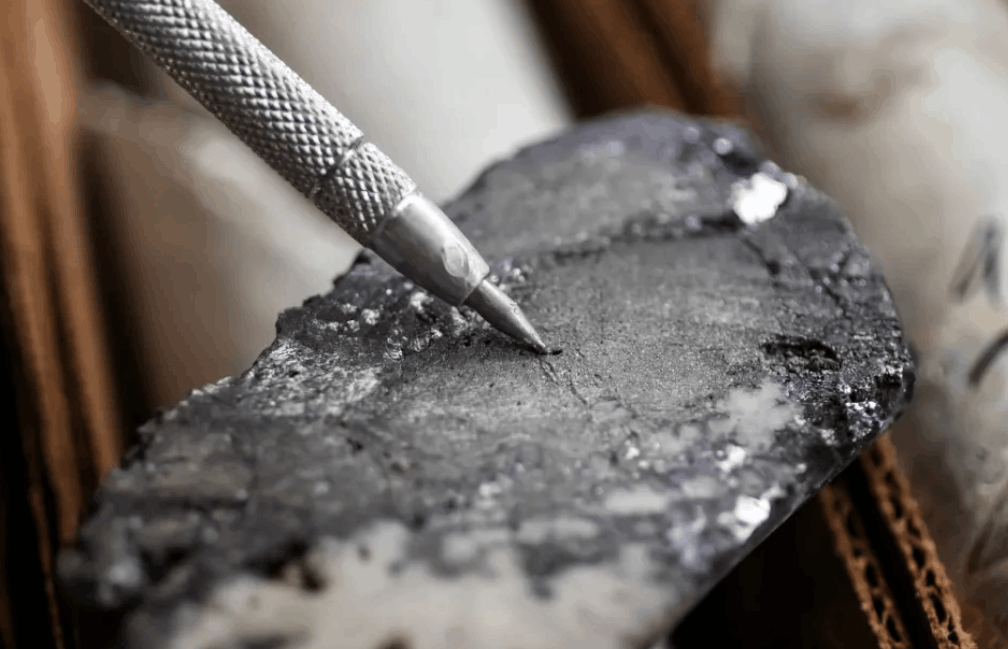
The 2026 IPO market has been dominated by AI infrastructure, quantum computing and aerospace companies, but one of the most intriguing new listings comes from a completely different corner of the economy. Sunshine Silver Mining & Refining (NYSE: SSMR) is not selling investors a software platform or an unproven biotechnology concept. Instead, it is built around one of the most famous silver mining assets in American history: the legendary Sunshine Mine in Idaho’s Silver Valley.
At first glance, the financial statements appear unattractive. The company generated only around $500,000 in annual revenue, posted a net loss of nearly $35 million, and remains years away from full commercial production. Yet despite these numbers, the IPO has traded remarkably steadily around its $13.50 offer price. This raises an obvious question for investors: is the market already seeing the long-term strategic value that goes far beyond today’s earnings?
The answer may lie in a combination of three major structural themes: the growing industrial demand for silver driven by artificial intelligence and renewable energy, the United States’ push for domestic critical mineral production, and the unique quality of the Sunshine Mine itself.
A Historic Mining Asset with Modern Strategic Importance
Sunshine Silver Mining & Refining is centered around the redevelopment of the Sunshine Mine Complex in Idaho, one of the most productive silver mining districts ever discovered in North America. Before operations ceased in the early 2000s, the mine had produced more than 360 million ounces of silver, making it one of the richest silver mines in U.S. history.
Today, the company is not merely attempting to reopen an old mine. It is building a long-term platform for domestic production and refining of strategic metals that are increasingly critical to the U.S. economy and national security.
According to company materials and project studies, once commercial production begins—currently targeted around 2028—the Sunshine Mine could produce approximately 6.7–7.6 million ounces of silver annually during its first five years of operation. That volume alone could increase total U.S. silver production by roughly 20%, making Sunshine one of the country’s largest primary silver producers.
This scale explains why many investors are willing to overlook current financial losses. The market is not valuing Sunshine based on today’s income statement but rather on the future cash flow potential of one of the world’s highest-grade undeveloped silver projects.
How Does Sunshine Silver Make Money?
At present, the company remains largely in the development phase, so recurring revenues are minimal. However, its future business model is relatively straightforward.
The primary source of revenue will come from the sale of silver concentrates and refined silver products. According to the project overview, approximately 80% of future revenue is expected to come from silver production, while lead and zinc by-products could account for another 15%. Additional value may come from exploration activities and the optimization of mineral resources.
Unlike diversified mining giants such as BHP or Rio Tinto, Sunshine is essentially a focused silver company. This means its long-term valuation will be highly sensitive to silver prices, but it also offers investors a much purer exposure to the precious metals cycle.
An increasingly important aspect of the investment thesis is that the project is not limited to silver alone. The company has highlighted the potential to process and refine other strategic minerals, including antimony, copper and potentially other critical materials that are increasingly important for defense systems, advanced electronics and semiconductor manufacturing. This significantly broadens the long-term opportunity.
Why Silver Could Become One of the Most Important Industrial Metals of the Decade
Many investors still associate silver primarily with jewelry or as a store of value similar to gold. However, the demand profile has changed dramatically over the past decade.
Silver is now an essential industrial input for several high-growth sectors:
- artificial intelligence data centers,
- high-performance semiconductors,
- photovoltaic (solar) panels,
- electric vehicles,
- advanced defense electronics,
- 5G and next-generation communications infrastructure.
AI may seem unrelated to mining at first glance, but the buildout of AI infrastructure requires massive investments in data centers, power distribution systems and high-performance electronics—all of which consume significant quantities of silver because of its unmatched electrical conductivity.
At the same time, global solar panel installations continue to expand, and each photovoltaic cell contains silver paste used in electrical contacts. Even though manufacturers are trying to reduce silver intensity per panel, overall demand continues to rise because installation volumes are growing even faster.
This means Sunshine Silver is indirectly exposed to some of the strongest secular growth themes of the next decade without being an AI company itself.
The U.S. Critical Minerals Strategy: A Major Tailwind
One of the most overlooked aspects of the Sunshine story is its alignment with U.S. industrial policy.
Recent legislation and government initiatives—including programs associated with the Inflation Reduction Act and broader critical mineral supply chain policies—have emphasized reducing America’s dependence on foreign mineral imports. China currently dominates several strategic mineral supply chains, creating geopolitical risks for the United States and its allies.
The Sunshine project fits almost perfectly into this strategic framework. A domestic source of silver, combined with refining capabilities and potential production of other critical metals, could become increasingly valuable as governments seek secure local supply chains.
This gives Sunshine a unique advantage compared with many international mining projects. It is not simply another commodity producer—it may become part of a broader national effort to rebuild domestic resource independence.
Competitive Landscape: Who Are Sunshine Silver’s Real Rivals?
Sunshine Silver does not compete directly with diversified mining conglomerates like BHP Group or Glencore, whose portfolios span dozens of commodities. Instead, its closest peers are specialized silver producers.
The most relevant publicly traded competitors include:
- Pan American Silver (NYSE: PAAS),
- Hecla Mining (NYSE: HL),
- First Majestic Silver (NYSE: AG),
- Coeur Mining (NYSE: CDE),
- MAG Silver (NYSE: MAG),
- Gatos Silver (NYSE: GATO),
- Endeavour Silver (NYSE: EXK).
According to comparative industry analysis, Sunshine’s strongest operational correlations are with Pan American Silver and Gatos Silver, reflecting its exposure to the silver mining cycle.
What differentiates Sunshine from these competitors is not current production—because the company has not yet restarted large-scale operations—but the quality and historical significance of its asset base. The Sunshine Mine is widely regarded as one of the highest-grade undeveloped primary silver projects in the world.
Bull Case vs. Bear Case: What Are Investors Really Buying?
Every early-stage mining investment is ultimately a balance between project quality and execution risk. Sunshine Silver is no exception.
Why Bulls Are Optimistic
The bullish thesis rests on several powerful arguments.
First, the company controls a world-class historical mining asset with significant remaining resource potential. Second, if silver prices remain elevated or continue rising, the future economics of the project could improve substantially. Third, management is investing in modernization and operational de-risking, which may lower future production costs. Finally, the growing strategic importance of domestic critical minerals creates an additional source of value beyond silver alone.
Another often overlooked advantage is timing. The mine is expected to enter production at a time when industrial silver demand may be materially higher than it is today due to AI infrastructure and renewable energy expansion.
Why Bears Remain Skeptical
The bearish case is equally important to understand.
Reactivating a historic underground mine is technically challenging and capital intensive. Unexpected geological issues, permitting delays, environmental obligations or cost overruns could materially affect project economics.
In addition, Sunshine remains highly dependent on commodity prices. If silver enters a prolonged bear market, projected returns could deteriorate quickly.
Finally, investors should remember that the company is currently pre-profit and pre-scale. Future financing rounds, additional debt or equity issuance could dilute shareholders before commercial production begins.
ETF Ownership and Institutional Interest: A Positive Signal?
One encouraging aspect of the investment story is that Sunshine Silver already appears in several mining and precious metals ETFs.
According to ETF exposure data, the stock has representation in funds such as:
- Global X Silver Miners ETF (SIL),
- iShares MSCI Global Silver Miners ETF (SLVP),
- VanEck Junior Gold Miners ETF (GDXJ),
- SPDR S&P Metals & Mining ETF (XME),
- Sprott Gold Miners ETF (SGDM).
The current weightings are not exceptionally large, but ETF inclusion is still important because it provides structural demand and can gradually increase institutional ownership over time. If the company successfully executes its development plan and production milestones, additional ETF inflows may follow.
However, investors should not overestimate this factor. At the moment, ETF ownership is more a sign of sector classification than a guarantee of future performance.
Can SSMR Become a Long-Term Winner?
The most interesting question may not be whether Sunshine Silver becomes profitable in the next year or two. Instead, investors should ask whether the company can evolve into one of the leading U.S. strategic metals producers by the end of the decade.
Unlike many speculative IPOs, Sunshine owns a tangible, difficult-to-replicate asset. Building a comparable project from scratch would require billions of dollars, years of permitting, and extensive geological expertise. In that sense, the company possesses a natural competitive moat.
Its future success, however, depends on several milestones:
- successful completion of mine redevelopment,
- maintaining financing flexibility,
- keeping capital expenditures under control,
- securing environmental and regulatory approvals,
- and benefiting from supportive long-term silver prices.
If management delivers on these objectives, the current valuation could eventually appear reasonable. If not, the stock could spend years trading sideways while investors wait for tangible progress.
Is the Current IPO Price an Attractive Entry Point?
One of the most striking features of SSMR has been the stability of the share price following the IPO. Unlike many recent technology or biotech listings, the stock has not experienced dramatic post-listing volatility.
This may indicate that investors view Sunshine as a long-duration strategic asset rather than a short-term trading vehicle.
From a long-term perspective, the current valuation can be interpreted as an early-stage entry into a project that may not fully mature until 2028–2030. On the other hand, because the company is years away from full production, investors should also expect periods of limited news flow and sideways price action.
For active traders, this could create opportunities around commodity price cycles and project-related announcements. For long-term investors, a gradual scale-in strategy may be more appropriate than a single large purchase.
A disciplined accumulation plan—building a position over time as key milestones are achieved—may reduce the risks associated with project delays or temporary weakness in the silver market.
Investment Evaluation
| Factor | Rating | Commentary |
|---|---|---|
| Industry Position | 8.5/10 | One of the most significant undeveloped U.S. silver projects. |
| Resource Quality | 9/10 | Historic, high-grade asset with substantial resource potential. |
| Strategic Asset Value | 9/10 | Strong alignment with U.S. critical minerals policy. |
| Growth Potential | 8.5/10 | Production restart and rising industrial silver demand create major upside. |
| Financial Strength | 4/10 | Pre-production company with ongoing losses and funding needs. |
| IPO Valuation | 7/10 | Reasonable relative to the size and quality of the underlying asset base. |
| Commodity Price Sensitivity | 5/10 | High dependence on future silver prices increases volatility. |
| Long-Term Investment Appeal | 8.5/10 | Attractive for patient investors willing to wait for execution. |
Overall Investment Score: 7.9/10
Sunshine Silver Mining & Refining is not a traditional value stock and not a mature dividend-paying mining company. It is a strategic development-stage project that combines exposure to precious metals, AI-driven industrial demand, energy transition themes and U.S. resource security.
The company still faces substantial execution risks, and investors should expect volatility before production begins. Nevertheless, the combination of a world-class mining asset, structural silver demand growth and increasing geopolitical importance of domestic critical minerals makes SSMR one of the more interesting resource-sector IPOs of 2026.
One-sentence conclusion: Sunshine Silver Mining & Refining is less a bet on today’s earnings and more a long-term investment in the future of strategic U.S. silver production—and if management executes successfully, the current IPO valuation could eventually prove to have been only the beginning of a much larger story.